Designing in the Age of AI Innovation
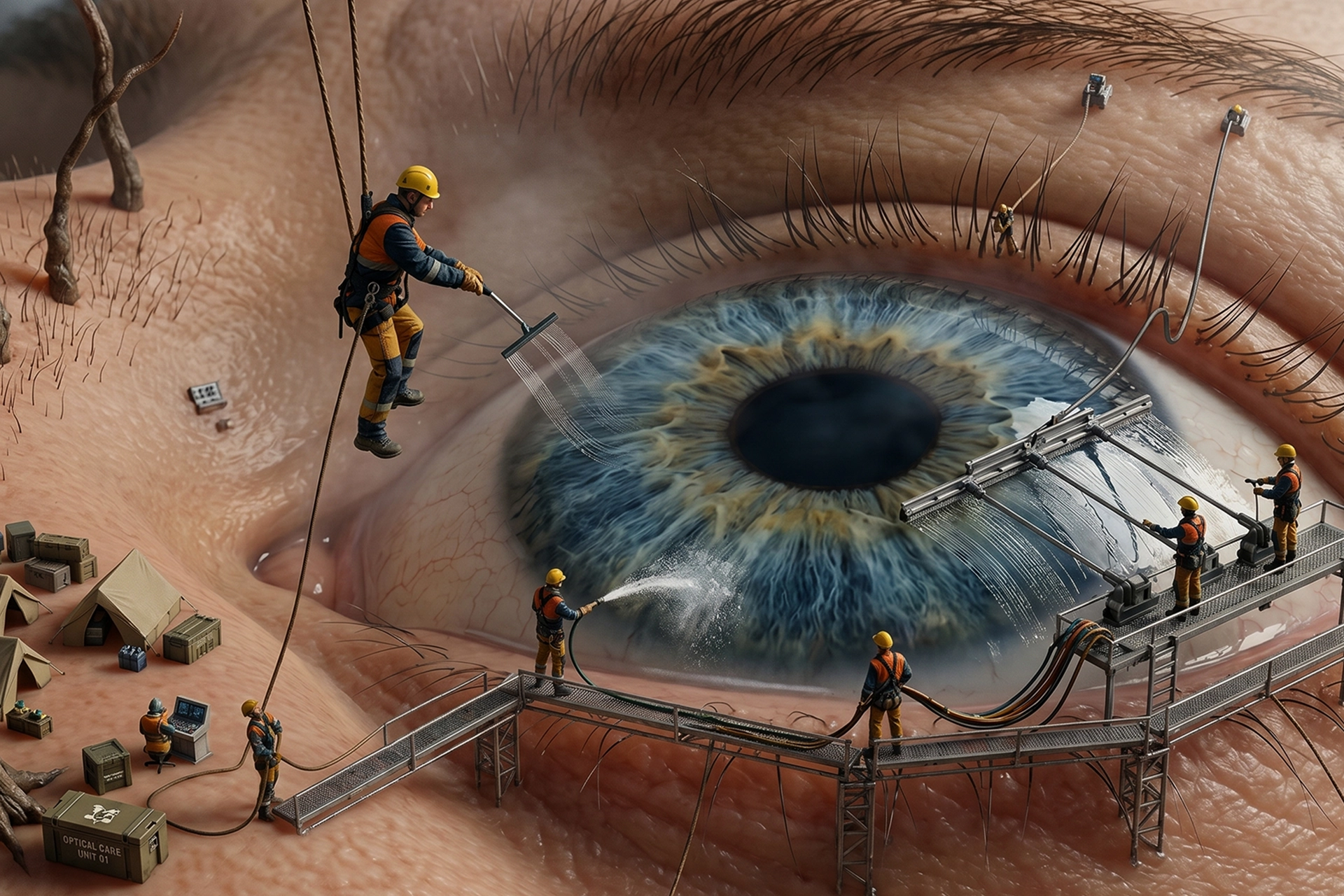
There was a time when design began with a blank page and a long conversation between imagination and constraint. A pencil would hesitate before the first stroke, not because of doubt, but because every line carried intention. Today, that pause still exists, but it has changed its shape. It now sits between human instinct and machine intelligence.
As a graphic designer with over a decade in the craft, I have watched tools evolve from simple executors to intelligent collaborators. What once took hours of layering, adjusting, and refining can now be suggested in seconds. Yet, paradoxically, the role of the designer has never felt more human.
AI has not replaced the designer’s eye; it has amplified its responsibility.
We are no longer just makers of visuals. We are curators of meaning in a world where images can be generated endlessly, instantly, and often convincingly without context. The challenge is no longer “Can we create this?” but rather “Should this exist, and what does it say?”
Design has always been a language. Fonts are tone. Color is emotion. Spacing is silent. Composition is rhythm. In the age of AI, this language is being spoken faster than ever before. But speed does not guarantee clarity. In fact, it often risks dilution.
This is where human intuition becomes the anchor.
AI can propose harmony, but it does not feel tension. It can simulate balance, but it does not understand cultural nuance, memory, or emotion attached to a shade of red or the discomfort of too much symmetry. It does not know why a design feels *right* when it breaks a rule at precisely the right moment.
That instinct-that quiet decision to leave space where something could have been filled-is still ours.
What excites me most is not the automation of design, but the expansion of possibility. Ideas that once died in the sketch phase due to time or technical limits can now be explored in parallel realities. A single concept can evolve into dozens of visual directions in minutes, each waiting to be shaped by human judgment.
In this sense, AI is not the artist. It is the studio-vast, responsive, and tireless.
But every studio still needs an architect.
The designer’s role is shifting from execution to direction, from production to curation. Taste is becoming the most valuable skill. Not taste in the superficial sense, but in the deep, trained intuition that distinguishes noise from narrative.
The future of design will not belong to those who can generate the most, but to those who can decide the best.
And perhaps, that is where beauty lies.
Because in a world of infinite generation, limitation becomes a creative act again. Choosing less becomes powerful. Editing becomes storytelling. Silence becomes design.
AI will continue to evolve, and so will our tools. But design will always return to the same origin point: human perception. The way we see, feel, remember, and interpret the world cannot be automated, it can only be expressed through new instruments.
So, we are not losing design to machines.
We are being asked to design more consciously than ever before.

 Let's talk about your project!


3 Comments
Brand Strategist March 9, 2026
Aisha Rahman
This captures the shift beautifully-AI may accelerate creation, but it’s still human intuition that gives design its soul. Truly resonant.
Creative Director March 11, 2026
Omar Khalid
A rare perspective that feels both grounded and visionary. In the noise of automation, this reminds us why taste and intention still matter.
UI/UX Designer March 16, 2026
Nandini Mehta
Poetic yet precise. It reframes AI not as a replacement, but as a space where design thinking becomes even more deliberate.